Key Takeaways
- Ukraine has postponed further orders of Helsing’s HX‑2 strike drones after frontline trials revealed launch failures and missing AI components.[1][2][3]
- The setbacks were documented in a German Defense Ministry presentation dated 20 November 2025 and confirmed by multiple sources in Germany and Ukraine.[1][6]
- Helsing disputes the findings, claiming successful test performance and confidence in the drone’s battlefield effectiveness.[2][4]
- Germany will not place follow‑on orders for the drones until Kyiv formally signals renewed interest.[1][5]
- The episode highlights the rapid, high‑risk development cycle of AI‑enabled unmanned systems in the Ukraine war.[4][6]
Introduction
Ukraine has placed a halt on additional purchases of the German‑made HX‑2 strike drone, the flagship product of defence‑technology startup Helsing. The decision follows a series of problems identified during front‑line testing by Ukraine’s 14th Regiment, an unmanned‑aerial‑systems unit. A German Ministry of Defence briefing and several independent reports reveal that the drones suffered launch failures and were missing key artificial‑intelligence (AI) subsystems that were promised in the original specifications.[1][2][3]
Background on Helsing and the HX‑2 Drone
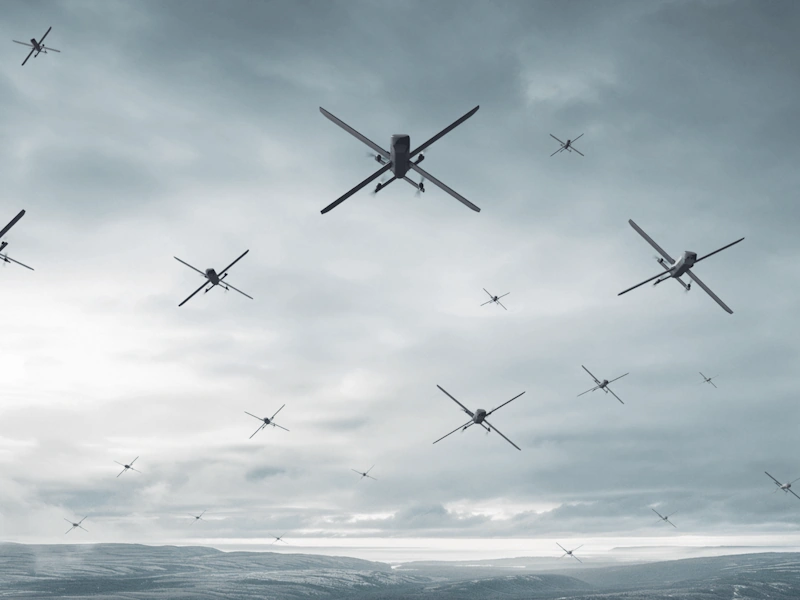
Founded in 2021 in Munich, Helsing quickly became Europe’s most valuable defence‑tech startup, backed by venture‑capital funds and a Swedish billionaire. Its product line includes the low‑cost HF‑1 kamikaze drone and the more advanced HX‑2, an “X‑wing” system that combines fixed wings with quadcopter rotors to enable vertical launch and long‑range autonomous strike capability of up to 100 km.[4][6]
In 2024 Helsing signed a contract to deliver 4,000 strike drones in partnership with a Ukrainian manufacturer. About half of the earlier HF‑1 units have already been supplied, while the contract was later shifted toward the newer HX‑2 platform.[4][5]
Front‑line Test Results and Ukraine’s Decision
According to a presentation prepared by a unit reporting to General Günter Schneider of the German Defense Ministry, the HX‑2 exhibited serious deficiencies during combat trials:
- Only roughly 25 % of the drones were able to launch successfully from the field catapult.[1][6]
- Several drones failed to take off entirely, contradicting the manufacturer’s claim of a high hit‑rate during first flights.[2][8]
- The AI‑enabled guidance suite—terminal guidance, mid‑course navigation, and visual target acquisition—was incompletely installed, limiting autonomous operation.[1][5]
- Electronic‑warfare jamming near the front line disrupted communications between the drones and their operators.[1][6]
Based on these findings, Ukraine has paused further orders while it reassesses the suitability of the HX‑2 for its current operational needs.[3][5]
German Ministry Presentation and Funding
The German presentation, dated 20 November 2025, indicated that the drones are funded by the German military as part of Berlin’s support package for Kyiv. Consequently, Germany has signaled it will not place a follow‑on procurement of the HX‑2 until Ukraine explicitly requests additional units.[1][5]
German officials have emphasised that test series are intended to reveal performance gaps under real combat conditions, and that iterative improvements are expected in such a fast‑moving technology domain.[2][9]
Company Response and Market Implications
Helsing issued a statement rejecting the presentation’s conclusions, stating that it was unaware of the document and that the alleged high failure rate was inaccurate. The company cited internal flight‑test data showing an “encouraging” hit‑rate and reaffirmed confidence that the HX‑2 would perform well even under electronic‑warfare conditions.[2][4]
Despite the dispute, the publicised setbacks have already dampened demand for the system, opening space for competing European and non‑European drone manufacturers such as Rheinmetall, Poland’s WB Electronics (Warmate series), and various U.S. and Israeli firms that are also courting Ukrainian contracts.[4][6]
Broader Context: AI‑Enabled Drone Warfare
The Ukraine conflict has accelerated the development and fielding of AI‑driven unmanned systems. Helsing’s rapid valuation growth—from initial seed funding to a €12 billion (≈ $14 billion) valuation in mid‑2025—reflects the strategic importance placed on autonomous strike platforms.[4][6]
Industry analysts note that Europe is seeking to close the gap with the United States and China in autonomous weapons, with companies positioning themselves as providers of “AI‑native” hardware rather than retro‑fitted legacy systems.[4][6]
Future Outlook
The pause on HX‑2 orders is likely to be temporary, contingent on whether Helsing can resolve the identified technical gaps and demonstrate reliable performance in successive trials. Continued German funding and Ukraine’s urgent need for effective strike assets suggest that negotiations will remain active.
Should Helsing address the launch and AI integration issues, the HX‑2 could still play a significant role in Ukraine’s evolving air‑strike doctrine. Conversely, prolonged deficiencies may shift procurement toward alternative platforms that have already proven their resilience under combat conditions.
Conclusion
The suspension of additional HX‑2 drone orders underscores the high‑stakes environment of wartime technology development. While Helsing disputes the reported shortcomings, the German Ministry’s presentation and frontline test data have prompted both Kyiv and Berlin to adopt a cautious stance. The episode serves as a reminder that even well‑funded, high‑profile defence startups must continuously validate their systems in the harsh realities of modern combat, especially as AI‑enabled weapons become central to the battlefield.
References
[^1]: Ukraine Holds Off on New Helsing Drone Orders After Setbacks. Bloomberg. Retrieved 20 January 2026.
[^2]: Ukraine halts additional orders of German HX-2 attack drones. Defence Blog. Retrieved 19 January 2026.
[^3]: Ukraine pauses further orders of German Helsing drones after test problems – Bloomberg. Ukrainska Pravda. Retrieved 19 January 2026.
[^4]: Ukraine Holds Off Drone Orders From Europe’s Biggest Defense Tech Firm After Setbacks. Kyiv Post. Retrieved 19 January 2026.
[^5]: Ukraine pauses further orders of German Helsing drones after test problems. Yahoo. Retrieved 19 January 2026.
[^6]: Ukraine suspends orders for Helsing’s AI drones following battlefield test setbacks. Espreso. Retrieved 19 January 2026.
[^7]: Ukraine Breaking News – Ukraine halts orders for Helsing drones after testing issues — Bloomberg. Facebook. Retrieved 19 January 2026.
[^8]: Ukraine’s military rejects German Helsing drones over critical flaw. MSN. Retrieved 19 January 2026.
[^9]: Problems with HX‑2 halted drone purchases in Ukraine. oboronka.mezha.ua. Retrieved 19 January 2026.
[^10]: Ukraine postpones new Helsing drone orders due to testing issues. UNN. Retrieved 19 January 2026.