Key Takeaways
- The European Union has launched a call for tenders to establish up to seven AI Gigafactories across Europe, aiming to strengthen technological sovereignty and computing capacity.
- The initiative is backed by up to €10 billion in EU and national public funding, with expectations to unlock at least €20 billion in private investment, totaling more than €30 billion.
- Eighteen Member States have joined the procurement, with the call closing on November 12, 2026, and award decisions expected in early 2027.
- The facilities will provide startups, SMEs, industry, academia, and public authorities access to infrastructure for training, inference, and fine-tuning advanced frontier AI models.
- The Commission has signed letters of intent with chipmakers AMD, NVIDIA, and Qualcomm to help secure access to advanced AI chips.
A Bold Push for European AI Sovereignty
On July 30, 2026, the European Union launched a call for tenders to establish up to seven AI Gigafactories across Europe, marking a major step in its ambition to become what officials are calling the “AI Continent.” The initiative, led by industry and supported by up to €10 billion in combined EU and national funding, is expected to unlock at least €20 billion in private investment across the Union, bringing the total investment to more than €30 billion [^1][^2].
The move forms part of a broader tech sovereignty push to reduce the EU’s dependence on foreign suppliers of cloud services and chips. European Commission President Ursula von der Leyen first announced the plan to build AI Gigafactories at the AI Action Summit in Paris in February 2025, with the ambition of replicating the success of the CERN laboratory in Geneva [^4].
What Are AI Gigafactories?
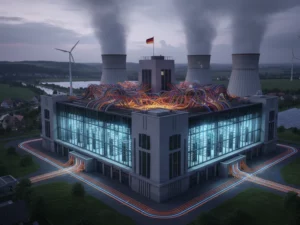
AI Gigafactories are large-scale computing facilities equipped with state-of-the-art, highly specialized chips designed to train the next generation of AI technologies—most notably advanced large language models that require processing trillions of data points. The facilities will combine advanced AI processors, software and cloud technology stacks, high-speed connectivity, and energy-efficient data centres [^1][^6].
Together with Europe’s existing network of 19 AI Factories, the new Gigafactories are expected to significantly expand the EU’s AI computing capacity. The initiative will give start-ups, scale-ups, small and medium-sized enterprises, industry, academia, and public authorities access to infrastructure for training, inference, and fine-tuning advanced frontier AI models [^1][^6].
Funding Structure and Procurement Process
The procurement programme will be delivered in two phases, supporting up to seven Gigafactories. The first funding stream will finance up to four projects with EU contributions of up to €500 million each across both phases, while a second stream will support up to three larger facilities eligible for up to €1 billion each [^6].
Of the €10 billion in public funding, roughly €5 billion is expected to come from Brussels, matched by another €5 billion from supporting EU member states. The remaining €20 billion is anticipated to come from private investment. However, under the current budget, Brussels can only commit €1 billion directly, with the rest expected to come from the next Multiannual Financial Framework (MFF), which remains under negotiation among member states [^4].
In exchange for their public contribution, the EU and supporting member states will receive a proportionate share of compute access to allocate to public projects, research centres, and AI labs of their choosing. All operating costs will fall on the private actors involved [^4].
Geographic Interest and Participation
The initiative has drawn considerable interest from industry, with 76 potential consortia expressing preliminary interest in submitting project proposals, covering 60 possible sites across 16 EU countries [^5][^6]. Eighteen Member States have joined the procurement [^1].
Ten countries have expressed interest in hosting a gigafactory: Germany, Italy, France, Poland, Czechia, Denmark, Finland, Greece, Portugal, and Spain. Both single-country and multi-country consortia are possible, and Paris has already signaled its intention to pursue a project independently [^4].
Addressing the Chip Dependency Challenge
While the Gigafactories aim to build sovereign European infrastructure, the EU remains heavily reliant on foreign suppliers for specialized AI chips. To address this, the Commission has signed memoranda of understanding with three major chipmakers: NVIDIA, AMD, and Qualcomm [^4][^8].
Gigafactory consortia will be able to source advanced processors from suppliers in Europe and like-minded countries, with part of the procurement potentially reserved for European start-ups and scale-ups. Among the criteria to assess the tenders are measures designed to avoid potential lock-in effects from suppliers [^4][^6].
“Access to the massive computing power of AI Gigafactories is a strategic necessity for Europe as AI development accelerates,” said Henna Virkkunen, the European Commission’s Executive Vice-President for Tech Sovereignty, Security and Democracy, who called the launch “a milestone for Europe in becoming an AI Continent” [^3][^8].
Timeline and Next Steps
The call for tenders closes on November 12, 2026. Following evaluation by the European High Performance Computing Joint Undertaking (EuroHPC JU), successful projects are expected to be announced in early 2027. Construction is slated to begin later that year, with the first AI Gigafactories expected to become operational within 18 months of contract signature—potentially by mid-2028 [^2][^4][^6].
The call is open to industry-led consortia bringing together companies, public bodies, investors, and other partners. Projects may be located within a single Member State or developed as cross-border infrastructures spanning several countries [^6].
The Global Context
The announcement comes amid a global race to build ever more powerful AI models, with massive data centre projects already underway in the United States and China. The scale of investment by individual American companies dwarfs the EU’s initiative: Alphabet expects to spend $180–190 billion in capital expenditure during 2026, Meta $125–145 billion, and OpenAI’s Stargate partners intend to invest $500 billion over four years [^5].
To put the seemingly impressive US investment numbers into perspective: some argue that the numbers are largely inflated because the money is going in circles between a few companies:
For comparison, xAI reports that a single Colossus cluster already contains more than 220,000 NVIDIA GPUs. The European Commission has not published absolute chip counts or power targets for the Gigafactories, describing their capacity only in relation to Europe’s strongest existing AI Factory [^5].
The programme could provide European start-ups, researchers, and institutions with computing capacity they could never finance independently, offering shared access to resources that are increasingly critical in the AI era [^5].
Alignment with EU Values
A central feature of the initiative is its commitment to ensuring that AI technologies developed in the Gigafactories will follow EU standards on data protection, safety, security, and ethics. The Commission has emphasized that the initiative will ensure Europe can develop advanced AI on its own infrastructure, in line with EU rules and values [^1][^8].
The Gigafactories initiative is part of the EU’s broader AI Continent Action Plan, which aims to transform Europe into a global leader in AI by accelerating the development, deployment, and uptake of the technology across key sectors including healthcare, education, industry, and environmental sustainability [^9].
Conclusion
The launch of the AI Gigafactories call represents a pivotal moment in Europe’s quest for technological sovereignty. While the initiative faces challenges—including funding constraints, reliance on foreign chip suppliers, and competition from (seemingly) vastly larger investments by individual US tech giants—it signals a clear commitment from the EU and its member states to build the infrastructure needed to compete in the global AI race.
With award decisions expected in early 2027 and facilities potentially operational by mid-2028, the success of this initiative will depend on the strength of the consortia that emerge, the ability to attract substantial private investment, and the EU’s capacity to navigate the complex interplay of technological ambition, industrial strategy, and regulatory values that define the European approach to AI.
References
[^1]: European Commission (July 30, 2026). “EU launches AI Gigafactories call to boost Europe’s computing capacity and unlock more than €30 billion in investment“. digital-strategy.ec.europa.eu. Retrieved July 31, 2026.