Key Takeaways
- Polarise secures up to €117 million in financing from Macquarie to expand its AI data‑center portfolio.
- The loan will fund the fit‑out of a new “AI Factory” in Munich for Deutsche Telekom’s Industrial AI Cloud.
- With up to 10,000 NVIDIA Blackwell GPUs, the facility is expected to boost Germany’s AI compute capacity by roughly 50 %.
- The project aligns with Europe’s push for AI sovereignty and complements larger AI‑gigafactory plans announced by Deutsche Telekom and partners.
Polarise, a German startup specializing in sovereign AI infrastructure, has received a loan of up to €117 million from Macquarie to accelerate the construction of an AI‑focused data centre for Deutsche Telekom in Munich [^1][^2]. The financing underpins the development of a high‑density “AI Factory” that will host thousands of NVIDIA GPUs, supporting Telekom’s Industrial AI Cloud and broader European goals of AI self‑reliance.
Funding and partnership details
The loan, announced in late 2025, will be provided by Macquarie’s infrastructure arm and is earmarked for the fit‑out of Polarise’s Munich AI data centre as well as additional projects across Europe [^1]. Polarise’s own announcement highlighted the partnership as a strategic move to expand “sovereign AI infrastructures” and to reuse existing facilities with modular “AI Pods” for rapid deployment [^2].
“We cannot wait for the EU Gigafactories. The race for AI will be decided today — in 2025, not in two or three years’ time. We need to take action now,” said Michel Boutouil, CEO of Polarise [^2].
AI data centre for Deutsche Telekom
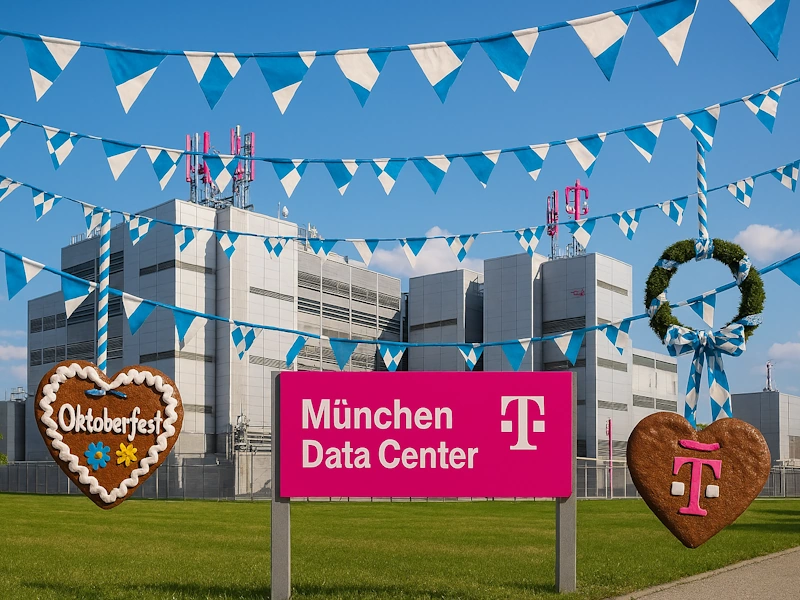
Deutsche Telekom has selected Polarise as the infrastructure partner for its new AI Factory in Munich, which will serve as the backbone of the company’s Industrial AI Cloud [^2][^3]. The facility will be equipped with up to 10,000 NVIDIA Blackwell GPUs, delivering approximately 0.5 EFLOPS of compute power and roughly 20 petabytes of storage [^4]. The data centre is slated to become operational in the first quarter of 2026, enabling German and European firms to run AI workloads on sovereign hardware within the EU‑regulated environment [^3].
“Mechanical engineering and industry have made this country strong. AI is a huge opportunity. In just six months we turn an idea into real AI computing power, Made for Germany,” said Tim Höttges, CEO of Deutsche Telekom [^3].
Strategic significance for European AI sovereignty
The Munich AI Factory is part of a broader European effort to close the AI infrastructure gap with the United States and China. Initiatives such as the EU’s €200 billion AI investment plan and the €20 billion fund for AI gigafactories aim to boost compute capacity across the continent [^3]. By combining Telekom’s network assets with NVIDIA’s GPU technology and Polarise’s modular design, the project exemplifies a “speedboat” approach that bypasses lengthy construction timelines [^4].
Industry analysts note that projects of this scale are essential to ensure data sovereignty, comply with the EU’s stringent data‑protection rules, and foster home‑grown AI innovation [^3]. The partnership also aligns with Germany’s industrial strategy, promising new jobs and increased competitiveness for sectors such as manufacturing, automotive, and logistics [^4].
Broader industry context
Parallel to the Polarise‑Telekom collaboration, Deutsche Telekom is reportedly exploring an AI gigafactory with the Schwarz Group, a venture that could further amplify Europe’s AI compute capabilities. Other major players, including NVIDIA and AMD, have announced multi‑billion‑dollar deals with European telecoms and cloud providers, highlighting a rapidly consolidating AI‑infrastructure market.
These developments indicate a shift toward localized, high‑performance AI clusters that can serve both private enterprises and public institutions while maintaining strict data‑sovereignty standards [^3][^4].
Conclusion
The €117 million financing from Macquarie marks a pivotal step for Polarise, positioning the startup as a key enabler of Europe’s AI sovereignty agenda. By delivering a state‑of‑the‑art AI Factory for Deutsche Telekom, the project not only boosts Germany’s compute capacity but also demonstrates how strategic financing, modular infrastructure, and public‑private partnerships can accelerate AI deployment across the continent.
References
[^1]: “Macquarie’s Latest Data Center Bet is a Tiny German Startup” (2025). Financial Post. Retrieved 12 January 2026.
[^2]: “Polarise Expands AI Factory Portfolio in Germany with New Munich Data Center” (5 Nov 2025). Polarise. Retrieved 12 January 2026.
[^3]: “AI sovereignty for Germany and Europe” (4 Nov 2025). T‑Systems. Retrieved 12 January 2026.
[^4]: “Deutsche Telekom, Schwarz Group build AI data centre for German newspaper reports” (30 Nov 2025). Reuters. Retrieved 12 January 2026.